25 Proven Restaurant Marketing Strategies That Actually Work in 2026

Running a restaurant in 2026 means competing against delivery apps, ghost kitchens, and establishments with million-dollar marketing budgets. The good news? You don’t need to spend a fortune to fill your tables.
After working with hundreds of restaurant owners over the past decade, I’ve seen which marketing strategies actually move the needle – and which ones are just expensive distractions. The reality is that the 80/20 rule of marketing applies perfectly here: 20% of your marketing activities will drive 80% of your results.
Here’s what I’ve learned works consistently, regardless of whether you’re running a food truck or a white-tablecloth establishment.
Table of Contents
- 1 The Foundation: Get Your Digital House in Order First
- 2 Local Marketing That Actually Drives Traffic
- 3 Social Media That Converts to Customers
- 4 Technology That Streamlines Marketing
- 5 Modern Customer Experience Enhancements
- 6 Delivery and Takeout Optimization
- 7 Event Marketing and Special Promotions
- 8 Advanced Marketing Strategies
- 9 Measuring What Matters
- 10 The Bottom Line
- 11 Frequently Asked Questions
- 11.1 What is the best marketing strategy for a restaurant?
- 11.2 How much should a restaurant spend on marketing?
- 11.3 How do I market my restaurant on a tight budget?
- 11.4 What social media platform is best for restaurant marketing?
- 11.5 Is email marketing still effective for restaurants?
- 11.6 How do I get more online reviews for my restaurant?
- 11.7 Ready to Grow Your Restaurant?
The Foundation: Get Your Digital House in Order First
Before you spend a dime on advertising, you need these basics locked down. I can’t tell you how many restaurant owners I’ve met who were running Facebook ads while their Google My Business listing had the wrong hours.
1. Optimize Your Google My Business Profile
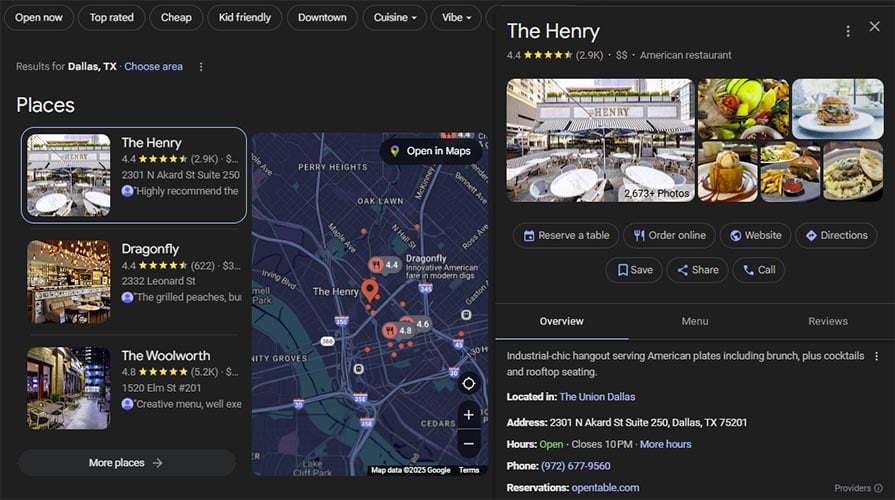
This isn’t optional anymore. When someone searches for restaurants near them, Google My Business determines whether you show up. I’ve seen restaurants increase their walk-in traffic by 40% just by properly setting up their Google My Business profile.
Here’s what actually matters:
- Accurate hours – Update them immediately when they change, especially during holidays
- High-quality photos – Upload at least 10 recent photos of your food, interior, and exterior
- Complete business information – Phone number, website, menu link, and parking details
- Regular posts – Share daily specials, events, or behind-the-scenes content weekly
The mistake most restaurants make? They set it up once and forget about it. Google rewards active profiles with better visibility.
2. Make Your Website Actually Work on Mobile
Over 70% of restaurant searches happen on mobile devices, yet I still see restaurants with websites that barely function on phones. Your restaurant website design needs to load fast and make it easy for hungry people to find what they need.
Essential elements for mobile:
- One-tap phone calling – Make your phone number clickable
- Clear menu access – Don’t bury your menu behind multiple clicks
- Location and hours – Prominently displayed on every page
- Fast loading times – Under 3 seconds or people bounce
If your current website fails any of these tests, fix it before you invest in driving more traffic to it.
3. Put Your Full Menu Online (With Prices)
I know, I know – you’re worried about competitors seeing your prices or customers being shocked by costs. But here’s the reality: people want to know what they’re getting into before they show up. Restaurants that hide their menus online are fighting an uphill battle.
When customers can’t find your menu and prices online, they’ll simply choose a competitor who makes that information easily available. Transparency builds trust, and trust leads to reservations.
4. Define Your Brand Identity and Unique Selling Proposition
Before you jump into tactics, you need to answer one question: why should someone choose your restaurant over the dozens of other options within a five-mile radius?
The most successful restaurants I’ve worked with have a clear brand identity that goes beyond “good food.” It’s the story behind the food, the experience you create, and the values you stand for. Maybe it’s your farm-to-table sourcing, your family recipes brought from another country, or the atmosphere you’ve built that makes people feel like regulars on their first visit.
Here’s how to nail your brand foundation:
- Develop your mission statement – Keep it short. What does your restaurant exist to do beyond make money?
- Identify your USP – What’s the one thing you do that nobody else in your area does as well?
- Create visual consistency – Your logo, menu design, social media aesthetic, and interior should all feel cohesive
- Train your staff – Everyone on your team should be able to articulate what makes your restaurant special
This isn’t fluffy branding work for the sake of it. A clear brand identity makes every other marketing strategy on this list more effective because you’ll know exactly who you’re talking to and what you’re saying.
Local Marketing That Actually Drives Traffic
National advertising is expensive and wasteful for most restaurants. Your best customers live and work within a few miles of your location – focus your energy there.
5. Become a Community Partner
The most successful local restaurants I work with don’t just serve food – they become part of the community fabric. This isn’t about sponsoring every little league team (though that can work too). It’s about showing up consistently where your customers already gather.
Practical community engagement:
- Local events – Set up at farmers markets, festivals, and school events with samples
- Business partnerships – Offer employee discounts to nearby offices and shops
- Charity involvement – Host fundraising nights for local causes
- Chamber of Commerce – Join and actually participate in networking events
The key is consistency. Don’t just show up once – become a regular presence in your community.
6. Partner with Local Businesses
Cross-promotion with non-competing local businesses is one of the most underutilized marketing strategies I see. The gym down the street, the hair salon next door, the office building across the street – these are all potential partners.
Create mutually beneficial relationships:
- Employee meal programs – Offer lunch deals to nearby office workers
- Referral programs – Give discounts to customers of partner businesses
- Event collaboration – Co-host events or provide catering for their functions
- Gift card exchanges – Sell each other’s gift cards at your locations
I’ve seen restaurants boost their lunch traffic by 30% just by partnering with nearby gyms to offer post-workout meal deals. You might also consider working with local POS dealers in your area for cross-promotional opportunities.
Social Media That Converts to Customers
Most restaurants approach social media wrong. They post pretty pictures and hope for the best. The restaurants that succeed on social media treat it like a direct line to their customers’ appetites.
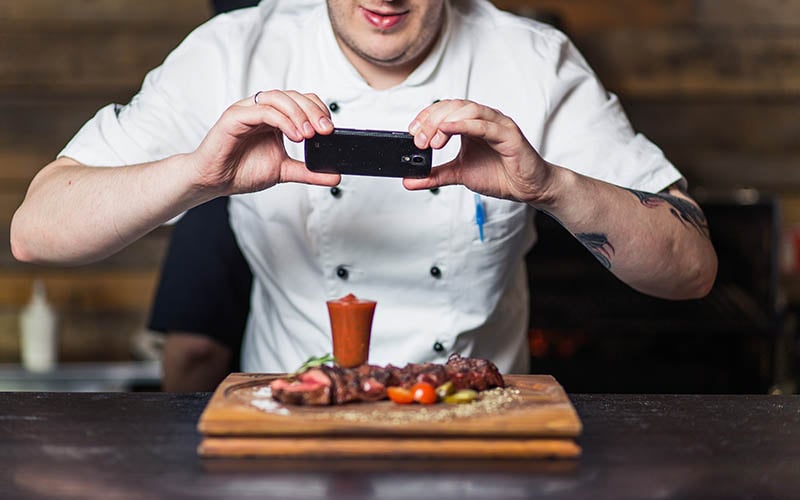
7. Master Instagram for Food Marketing
Instagram remains the king of food marketing, but the strategy has evolved. It’s not enough to post pretty pictures anymore – you need to create content that makes people take action.
What works on Instagram in 2026:
- Behind-the-scenes content – Show your kitchen team at work, prep processes, ingredient sourcing
- User-generated content – Repost customer photos and tag them (with permission)
- Story highlights – Create permanent highlights for your menu, location, hours, and specials
- Local hashtags – Use neighborhood-specific hashtags to reach nearby customers
The biggest Instagram mistake? Posting sporadically. Consistent posting (3-4 times per week minimum) beats perfect photos posted occasionally.
8. Use Facebook Ads for Local Reach
While organic Facebook reach has declined, Facebook Ads still deliver excellent results for restaurants when used correctly. The targeting options are incredibly precise – you can literally target people who live within 5 miles of your restaurant and have shown interest in dining out recently.
Effective Facebook ad strategies:
- Geographic targeting – Focus on a 3-5 mile radius around your location
- Lookalike audiences – Target people similar to your existing customers
- Event promotion – Promote special events, live music, or seasonal menus
- Retargeting – Show ads to people who’ve visited your website but haven’t been in yet
Start with a small budget ($10-20 per day) and scale up what works. You don’t need huge ad spends to fill tables.
9. Partner with Local Food Influencers
Nearly 50% of diners now discover new restaurants through social media, and local food influencers are one of the most powerful drivers of that discovery. I’m not talking about paying celebrities tens of thousands of dollars for a single post – I’m talking about the local food blogger with 5,000-20,000 followers who lives in your neighborhood and whose audience trusts their restaurant recommendations.
Micro-influencers in the food space tend to have higher engagement rates than big accounts, and their followers are hyper-local, meaning they can actually walk into your restaurant.
Here’s how to start:
- Find the right creators – Search local food hashtags on Instagram and TikTok (like #[YourCity]Eats or #[YourCity]Food) to find influencers already covering restaurants in your area
- Start small – Invite a local food blogger for a complimentary meal in exchange for an honest review. Many micro-influencers are happy with a great dining experience as compensation
- Set clear expectations – Agree on deliverables upfront: one Instagram Reel and two Stories, for example
- Track results – Give each influencer a unique discount code so you can measure actual visits and orders
- Repurpose the content – Get permission to repost their content on your own channels. One influencer visit can generate weeks of social media material
The key mistake restaurant owners make with influencer marketing is treating it as a one-off transaction. The real value comes from building ongoing relationships with 3-5 local creators who genuinely enjoy your food and become repeat advocates for your brand.
Technology That Streamlines Marketing
The right technology doesn’t just make operations easier – it turns every transaction into a marketing opportunity.

10. Implement a POS-Integrated Loyalty Program
Loyalty programs work, but only if they’re easy to use and actually reward frequent customers. The restaurant POS software you choose should make loyalty program management automatic.
What makes loyalty programs successful:
- Simple enrollment – Customers can join in seconds at checkout
- Automatic tracking – No punch cards or apps to download
- Meaningful rewards – Free items, not just percentage discounts
- Personal touches – Birthday rewards and anniversary acknowledgments
I’ve worked with restaurants where 40% of their revenue comes from loyalty program members. These customers visit more frequently and spend more per visit than non-members.
Many leading POS platforms now offer in-house loyalty programs that allow you to create customer profiles, track sales, and issue rewards. It’s an excellent way to automate your loyalty program and prevent individuals from taking advantage of your system.
11. Build and Use Your Email List
Email marketing consistently delivers the highest ROI of any digital marketing channel for restaurants. The key is building your list the right way and actually using it effectively.
List-building strategies that work:
- Receipt-based signups – Capture emails during the payment process
- WiFi capture – Require email signup for guest WiFi access
- Contest entries – Run monthly giveaways that require email signup
- VIP programs – Offer exclusive deals to email subscribers
Send emails weekly with your specials, events, and seasonal menu changes. Keep them short, visual, and focused on driving visits.
By creating a loyalty program, hosting a sign-up form, or requesting customer details, you can begin to build an email list of potential customers. You don’t have to run a “salesy” ad campaign; you can send updates about specials, promotions, new menu items, and seasonal changes. Many of the newer POS systems are changing and will have these features baked in.
12. Launch SMS and Text Message Marketing
If email is the workhorse of restaurant marketing, SMS is the sprinter. Text messages have a 98% open rate compared to email’s roughly 40% in the restaurant industry, and most people read them within three minutes. Yet most independent restaurants still aren’t using text marketing at all — which means it’s a massive competitive advantage if you start now.
SMS works especially well for restaurants because it’s built for urgency. A text saying “Slow afternoon — 20% off all appetizers until 5 PM” can fill tables within the hour in a way that an email or Instagram post simply can’t.
Here’s how to build an effective restaurant SMS program:
- Build your list the right way – Add SMS opt-ins to your online ordering checkout, WiFi login, loyalty program signup, and in-store QR codes. Always get explicit consent (it’s required by law under TCPA regulations)
- Keep messages short and actionable – Text should feel personal, not like a newsletter. Include a clear call to action: “Reply YES to reserve” or “Show this text for a free dessert”
- Use it for time-sensitive promotions – Flash deals, slow-day specials, limited-time menu items, and event reminders are perfect for SMS
- Automate key touchpoints – Set up automatic texts for birthday offers, post-visit thank-yous, and win-back messages for customers who haven’t visited in 30-60 days
- Don’t overdo it – Two to four texts per month is the sweet spot. More than that and you’ll see unsubscribes climb
Many POS and marketing platforms now include built-in SMS tools, so you may already have access to this capability without needing a separate service. If not, platforms like SimpleTexting and SlickText offer affordable restaurant-focused plans.
13. Invest in Strategic SEO
When people search for “best Italian restaurant near me” or “pizza delivery in [your city],” you want to appear in the results. Local SEO isn’t complicated, but it requires consistent effort.
Local SEO priorities:
- Google My Business optimization – Keep information current and post regularly
- Local keywords – Include your city and neighborhood in website content
- Online directories – Maintain consistent information across Yelp, TripAdvisor, etc.
- Customer reviews – Encourage and respond to reviews on all platforms
SEO is a long-term strategy, but the payoff is substantial – organic search traffic converts better than paid advertising.
Modern Customer Experience Enhancements
Technology should enhance the human experience, not replace it. The most successful restaurants use technology to streamline operations while maintaining personal service.
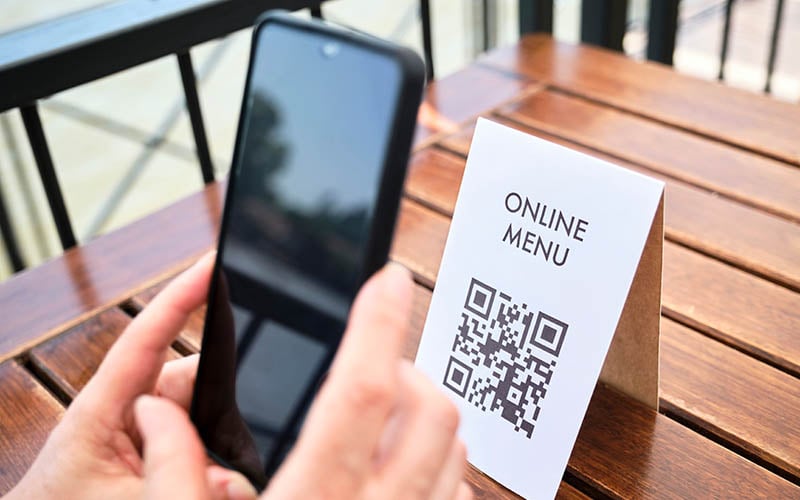
14. Implement QR Code Ordering and Payment Systems
QR codes aren’t just a pandemic trend – they’re here to stay. According to recent data, there’s been a 150% increase in QR code adoption by US restaurants in the past two years, and restaurants using QR code payments report 15% increases in table turnover rates.
Modern QR code systems offer more than contactless menus:
- Direct ordering – Customers can order and pay without waiting for servers
- Integrated payment processing – Streamlined checkout reduces transaction times
- Real-time menu updates – Change prices and availability instantly
- Customer data collection – Capture email addresses and ordering preferences
- Upselling opportunities – Suggest add-ons and promotions during ordering
The key is implementation strategy. Don’t eliminate human interaction entirely – use QR codes to handle routine tasks while freeing staff to focus on hospitality and customer service. Train your team to help customers who aren’t comfortable with the technology.
Choose QR systems that integrate with your existing POS to maintain unified reporting and inventory management. Many restaurants are also adding online reservation systems to their QR code menus, allowing customers to book future tables while browsing your current offerings.
15. Monitor and Manage Your Online Reputation
Your online reputation directly impacts your bottom line. A one-star increase in your average Yelp rating can increase revenue by 5-9%, according to multiple studies. The key is actively managing reviews rather than hoping for the best.
Comprehensive reputation management:
- Monitor all platforms – Track reviews on Google, Yelp, TripAdvisor, Facebook, and OpenTable
- Respond quickly – Reply to all reviews within 24 hours when possible
- Stay professional – Never get defensive, even with unfair criticism
- Offer solutions – Invite unhappy customers back to resolve issues
- Thank positive reviewers – Show appreciation for good feedback
- Encourage reviews – Train staff to ask satisfied customers to leave reviews
- Make it easy – Provide direct links to your review profiles
The best time to request reviews is immediately after positive dining experiences. Include review requests on receipts, in follow-up emails, and through social media posts.
Use review management tools that alert you to new reviews across platforms so you can respond promptly and consistently. Register your restaurant on major review platforms like Yelp, Google, TripAdvisor, and OpenTable. Don’t just hope for good online reviews – create systems to generate them.
Delivery and Takeout Optimization
The pandemic permanently changed dining habits. Even as dine-in has recovered, delivery and takeout remain major revenue streams for most restaurants.
16. Strategic Third-Party Delivery Partnerships
Yes, delivery platform fees are high (typically 15-30% of the order value). But done strategically, platforms like UberEats, DoorDash, and Grubhub can be profitable marketing channels.
Making delivery profitable:
- Menu engineering – Create delivery-specific items with higher margins
- Minimum orders – Set minimums that make orders profitable after fees
- Packaging costs – Factor takeout container costs into menu pricing
- Platform optimization – Use high-quality photos and detailed descriptions
Treat delivery platforms as customer acquisition tools. Focus on turning first-time delivery customers into direct customers for future orders.
17. Develop Your Own Online Ordering
While third-party platforms provide exposure, developing your own online ordering system saves you commission fees and gives you direct customer relationships. Most small business POS platforms offer integrated online ordering capabilities.
Benefits of direct online ordering:
- Higher profit margins – No commission fees to third parties
- Customer data – Build your own customer database
- Brand control – Control the entire customer experience
- Marketing opportunities – Upsell and cross-sell directly
Promote your direct ordering system through email, social media, and in-store signage.
Event Marketing and Special Promotions
Special events and promotions create urgency and give people reasons to choose your restaurant over competitors.
18. Host Regular Events
Successful restaurants create their own reasons for customers to visit. This doesn’t mean expensive entertainment – it means consistent programming that builds anticipation.
Event ideas that work:
- Weekly themes – Trivia nights, live music, wine tastings
- Seasonal celebrations – Holiday parties, harvest dinners, summer BBQs
- Community events – Fundraisers, book clubs, business networking
- Chef collaborations – Partner with other local chefs for special dinners
The key is consistency. If you do Trivia Tuesday, make sure it happens every Tuesday. Regular customers should know what to expect.
19. Run Strategic Competitions and Giveaways
Well-executed competitions and giveaways can dramatically increase your social media following and email list while generating buzz around your restaurant.
Giveaway best practices:
- Valuable prizes – Gift cards, catered dinners, or exclusive experiences
- Entry requirements – Follow social accounts, sign up for email, tag friends
- Clear rules – Make entry requirements and deadlines obvious
- Follow-up marketing – Use the attention to promote upcoming events
Run giveaways monthly or quarterly to maintain engagement without seeming desperate.
Advanced Marketing Strategies
Once you’ve mastered the basics, these advanced strategies can help you stand out in competitive markets.
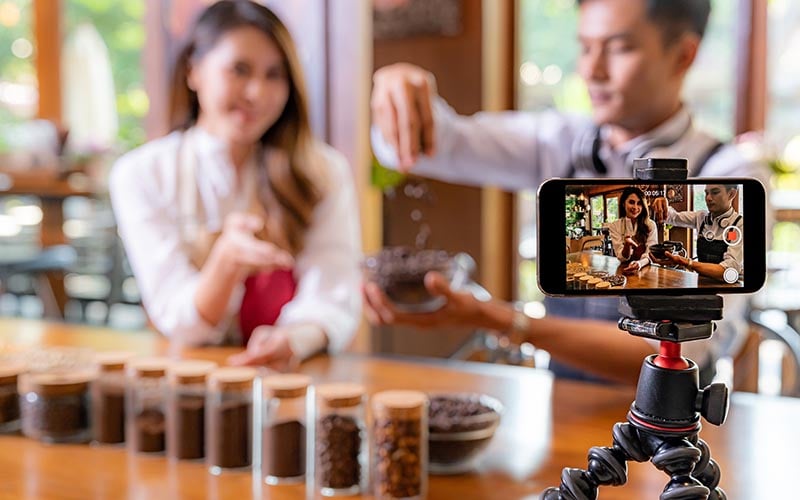
20. Master Short-Form Video Content (TikTok and Reels)
Short-form video content has become the highest-ROI format for restaurant marketing. According to Nation’s Restaurant News, 53% of millennial users have dined at a restaurant after viewing TikTok content, and 36% of all TikTok users have ordered from restaurants after watching their videos.
What makes restaurant video content work:
- Behind-the-scenes content – Show food prep, kitchen operations, and staff personalities
- Signature dish showcases – Quick tutorials or “satisfying” preparation videos
- Restaurant atmosphere – Give virtual tours highlighting your unique ambiance
- Customer moments – Capture genuine reactions and celebrations
- Trending challenges – Participate in food-related TikTok trends and challenges
Keep videos between 15-60 seconds for optimal engagement. Focus on authentic, entertaining content rather than polished advertisements. The platform rewards creativity and authenticity over high production values.
Post consistently (3-4 times per week) and engage with comments to build a community around your brand. Cross-post your TikTok content to Instagram Reels and YouTube Shorts to maximize reach.
21. Invest in Professional Food Photography
In a visual world, amateur photos can make great food look unappetizing. Professional food photography is an investment that pays dividends across all your marketing channels.
What professional photos enable:
- Social media content – Build a library of share-worthy images
- Website appeal – Make your online menu visually compelling
- Print marketing – Create professional flyers, menus, and advertisements
- Advertising assets – Use across all digital advertising platforms
Budget for a professional food photography session annually. The initial investment will provide content for months of marketing.
You spend a lot of money on your kitchen and restaurant equipment, so you might even consider taking pictures of your complete restaurant environment. Personalizing your restaurant with pictures of your staff and chef is also a good idea.
While this might sound like an expensive investment for a small restaurant, using a professional photographer is much more affordable than purchasing the photography equipment on your own. Some social media marketing companies will also include food photography as part of their services list.
22. Use Menu Engineering as a Marketing Strategy
Most restaurant owners think of their menu as a list of items and prices. Smart operators treat it as their most powerful marketing tool. Strategic menu design can influence what customers order, increase your average ticket size, and even drive social media buzz.
Menu engineering is the practice of analyzing the profitability and popularity of every item on your menu, then using design, placement, and pricing psychology to steer customers toward your highest-margin dishes.
Here’s how to put it into practice:
- Categorize your items – Map every dish into one of four buckets: stars (high profit, high popularity), puzzles (high profit, low popularity), plowhorses (low profit, high popularity), and dogs (low profit, low popularity). Focus your marketing on stars and work to reposition puzzles
- Use strategic placement – The top right corner of a menu gets the most attention. Place your highest-margin items there. Use boxes, borders, or icons to draw the eye to profitable dishes
- Create “decoy” pricing – Place a higher-priced item near the dish you actually want to sell. A $45 steak makes the $28 pasta look like a great deal
- Design for shareability – Create at least one or two visually stunning “Instagram-worthy” dishes that customers will photograph and post organically. This turns your menu into a social media marketing engine
- Run limited-time offers (LTOs) – Seasonal menu items and limited-run specials create urgency, drive repeat visits, and give you fresh content for email, SMS, and social media campaigns
Restaurants that actively engineer their menus typically see profit increases of 10-15% without spending a dime on advertising. It’s one of the highest-ROI marketing activities you can do.
23. Use AI to Personalize Your Marketing
AI-powered marketing isn’t just for big chains with huge budgets anymore. Affordable tools now let independent restaurants automate personalized outreach, respond to reviews at scale, and make smarter decisions about when and how to reach their customers.
Here’s where AI is making the biggest impact for restaurants right now:
- Automated review responses – Tools like Owner.com and various reputation management platforms use AI to draft professional, personalized responses to Google and Yelp reviews within minutes. This saves hours of work each week and ensures no review goes unanswered.
- Personalized offers based on customer data – Your POS and customer data platform already collect information about what customers order, when they visit, and how much they spend. AI can segment those customers automatically and send the right offer to the right person — a lunch deal to your weekday regulars, a wine promotion to your Friday night big spenders. SkyTab POS is one example that has these tools built in.
- Smart campaign timing – Rather than blasting your entire list at the same time, AI tools can analyze when each customer is most likely to open and act on a message, then send it at the optimal moment.
- Predictive churn detection – AI can identify customers whose visit frequency is declining before they stop coming entirely, triggering a win-back offer while there’s still time to save the relationship.
You don’t need to overhaul your entire tech stack. Start by using AI review response tools (many are free or very low cost) and explore whether your existing POS or email marketing platform offers AI-powered segmentation features. The restaurants that adopt these tools early will have a serious edge over competitors still doing everything manually.
24. Leverage Google Ads for Local Traffic
As Google is the internet’s most popular search engine, it’s no wonder that so many business owners invest in the platform’s in-house marketing platform. While investing in SEO can increase your organic traffic, using Google Ads can boost your restaurant to the top of search results for specific keywords.
One of the primary benefits of Google Ads is that you can track your ad performance, and you only pay when a customer clicks on your advertisements. This pay-per-click (PPC) model means that you bid on clicks and pay when a consumer interacts with your ad. This can be much more cost-effective than paying for traditional advertisements that primarily focus on reaching a broad range of people.
Google Ads strategies for restaurants:
- Local targeting – Focus ads on people searching near your location
- Keyword bidding – Target searches like “pizza delivery near me” or “romantic dinner [city]”
- Ad extensions – Include your phone number, location, and menu links
- Landing page optimization – Direct clicks to relevant pages (menu, reservations, ordering)
If managing Google Ads feels overwhelming, consider working with a specialized agency like Restaurant Growth that understands the unique challenges of restaurant marketing and can help you maximize your ad spend ROI.
25. Analyze Your Data and Create Marketing Plans
The most successful restaurants don’t guess – they use data to drive their marketing decisions. Your POS system contains a goldmine of information about your customers, popular items, and sales patterns.
Essential data to track and analyze:
- Peak dining times – When to focus your marketing efforts
- Popular menu items – What to highlight in your promotions
- Customer demographics – Who your marketing should target
- Seasonal trends – When to launch specific campaigns
- Marketing ROI – Which strategies actually drive revenue
Use this data to create focused marketing plans with clear key performance indicators (KPIs) rather than random promotional activities. Many modern POS systems provide built-in analytics that make this analysis automatic.
Review your marketing performance monthly and double down on what’s working while eliminating strategies that don’t deliver results.
Measuring What Matters
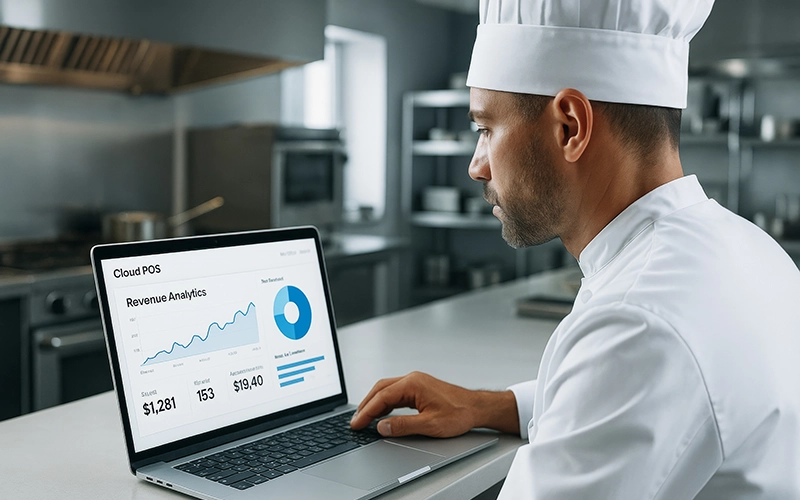
The difference between successful restaurant marketing and wasted money is measurement. You need to track what’s working and double down on the strategies that deliver results.
Key metrics to track:
- Customer acquisition cost – How much you spend to acquire each new customer
- Customer lifetime value – Average revenue per customer over their relationship with you
- Table turn rates – How efficiently you’re using your dining room capacity
- Average ticket size – Whether your marketing is attracting profitable customers
- Return customer percentage – The ultimate measure of customer satisfaction
Most modern POS systems provide detailed analytics that make tracking these metrics straightforward. Use this data to guide your marketing decisions.
The Bottom Line
Restaurant marketing in the current market isn’t about flashy campaigns or viral social media posts. It’s about consistently executing the fundamentals while building genuine relationships with your community.
The restaurants that thrive focus on three core principles:
- Exceptional food and service – Marketing can’t fix bad food or poor service
- Consistent local presence – Show up regularly where your customers are
- Data-driven decisions – Measure results and invest in what works
Start with the foundation strategies (Google My Business, mobile website, review management) before moving to advanced tactics. Master the basics, then layer on complexity as your marketing sophistication grows.
Remember: you don’t need to implement all 25 strategies immediately. Choose 4-5 that align with your budget and capabilities, execute them consistently for 90 days, then evaluate and expand.
The restaurant business is challenging, but with the right marketing approach, you can build a thriving operation that serves your community and supports your team for years to come.
Frequently Asked Questions
What is the best marketing strategy for a restaurant?
There’s no single “best” strategy — it depends on your budget, location, and customer base. That said, the highest-impact starting point for most restaurants is optimizing your Google My Business profile and actively managing your online reviews. These two strategies are free, they directly influence whether local customers find you, and they compound over time. Once those foundations are solid, adding email marketing and a loyalty program typically delivers the strongest ROI.
How much should a restaurant spend on marketing?
Most restaurant industry benchmarks recommend spending 3-6% of gross revenue on marketing. A newer restaurant or one trying to grow aggressively may need to spend closer to 6-10% in the first year or two to build awareness. The key is tracking your return on each channel. If your Facebook Ads are generating $5 in revenue for every $1 spent, increase that budget. If a tactic isn’t producing measurable results after 90 days, reallocate that money elsewhere.
How do I market my restaurant on a tight budget?
Some of the most effective marketing strategies cost nothing. Optimizing your Google My Business profile, encouraging customer reviews, posting consistently on Instagram, building an email list, and partnering with nearby businesses are all free or nearly free. SMS marketing and micro-influencer partnerships can also deliver outsized results on minimal budgets — a complimentary meal for a local food blogger can generate more exposure than hundreds of dollars in paid ads.
Instagram and TikTok are the clear leaders for restaurant marketing in 2026. Instagram is the top platform for food discovery among diners aged 18-35, and TikTok drives more restaurant visits than any other social platform — research shows over 50% of millennial users have visited a restaurant after seeing it on TikTok. Facebook Ads remain valuable for precise local targeting, even though organic reach on Facebook has declined. The best approach is to focus on one or two platforms and post consistently rather than spreading yourself thin across every channel.
Is email marketing still effective for restaurants?
Absolutely. Email marketing delivers an average ROI of $36-44 for every dollar spent, making it one of the most cost-effective channels available. The key is relevance and frequency — send weekly emails featuring your specials, events, and seasonal menu updates. Pair email with SMS marketing for the best results: email drives consideration (people save it for later), while text messages drive immediate action (people read them within minutes).
How do I get more online reviews for my restaurant?
Make it systematic, not random. Train your staff to ask satisfied customers directly — a simple “If you enjoyed your meal, we’d really appreciate a Google review” works surprisingly well. Include direct review links on receipts, follow-up emails, and table signage with QR codes. The best time to ask is immediately after a positive interaction. Respond to every review (positive and negative) within 24 hours, because potential customers read your responses just as closely as the reviews themselves.
Ready to Grow Your Restaurant?
Whether you’re focused on marketing, operations, or retention, the right POS system can help you automate more and stress less.