
Lightspeed Retail POS
$89.00
 Jason Feemster
Lightspeed Retail POS Review: Features, Pricing, Pros & Cons
Updated October 2026
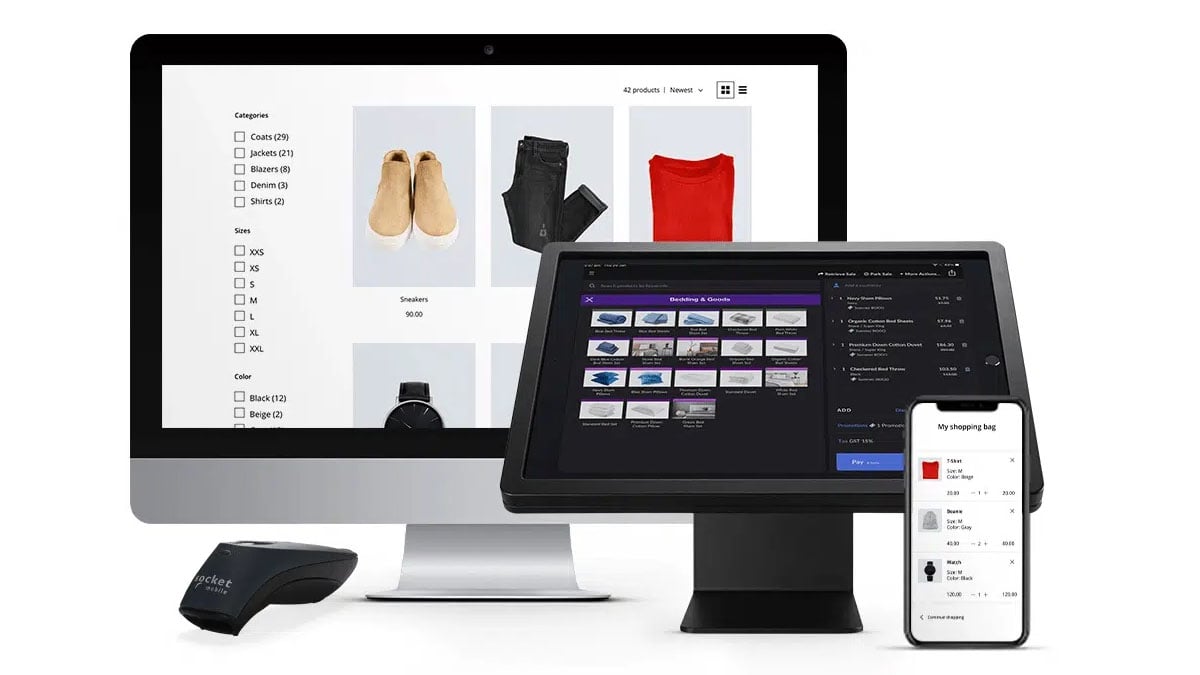
Lightspeed Retail is a cloud-based POS built for retailers who need advanced inventory control, multi-location tools, and omnichannel selling. Plans start at $89/mo on annual billing, and Lightspeed Payments card-present processing is 2.6% + 10¢ on every plan. It’s best suited for established businesses with complex inventory: apparel shops, sporting goods stores, bike shops, and specialty retailers. The catch: smaller shops may find the pricing and feature depth more than they need, and loyalty, advanced reporting, and 24/7 phone support sit on the higher tiers.
👉 Compare Lightspeed Retail to other POS systems
I’ve tested a lot of retail POS systems, and Lightspeed Retail consistently stands out for inventory power and multi-location scalability. The matrix inventory system handles variants, SKUs, and vendor catalogs better than most competitors. But don’t expect a plug-and-play experience. There’s a learning curve, and a lot of the value unlocks on the Core plan and up.
Lightspeed has grown through acquisitions, including Vend (2021), ShopKeep (2020), and Upserve (2020). If you’re searching for those products, you’re in the right place; they’re now part of Lightspeed.
🎥 Our Lightspeed Retail Video Review
👆 Watch our 6-minute hands-on review covering features, pricing, and how Lightspeed stacks up against the competition.
Pros & Cons
- Excellent inventory and reporting tools
- Great for apparel and specialty retail
- Same rate for every card brand
- Built-in eCommerce on every plan
- Loyalty and CRM from Core up
- Wholesale and NuORDER catalog access
- Too complex for small, simple shops
- Best features require higher tiers
- Extra fee if using another processor
- 24/7 phone support only on Plus
- Learning curve for new users
How Much Does Lightspeed Retail Cost?
Lightspeed Retail starts at $89/mo on annual billing for the Basic plan, or $109/month paid month-to-month. Core runs $149/mo and Plus $289/month on annual billing. Each plan includes one register; additional registers are $59/month each.
| Plan | Annual Billing | Month-to-Month | What It Adds |
|---|---|---|---|
| Basic | $89/mo | $109/mo | 1 register, integrated payments, inventory management, basic eCommerce, Lightspeed Wholesale and NuORDER catalog access, 24/7 chat support |
| Core | $149/mo | $179/mo | + In-store and online loyalty, advanced sales/staff/inventory reports, accounting and marketing integrations, mobile scanner app, landed cost tracking |
| Plus | $289/mo | $339/mo | + Custom reporting, forecasting and order recommendations, API access, workflows and automation, custom user roles, single sign-on, 24/7 phone support |
Prices reflect Lightspeed Retail (X-Series). Enterprise pricing is available for larger operations.
Payment Processing
Lightspeed Payments is built in, and Lightspeed’s retail pricing page lists a card-present rate of 2.6% + 10¢ on every plan. Online and keyed-in rates aren’t published on the pricing page, so ask for them in your quote. Every card brand, including Amex, processes at the same rate.
Key Features
Quick Specs
| Feature | Lightspeed Retail |
|---|---|
| Best For | Apparel, sporting goods, bike shops, pet stores, multi-location retail |
| Starting Price | $89/mo (annual billing) |
| Free Trial | 14 days |
| Card-Present Rate | 2.6% + 10¢ |
| Extra Registers | $59/mo each |
| Multi-Location | Yes |
| eCommerce | Built in on every plan (basic on Basic) |
| Support | 24/7 chat on all plans; 24/7 phone on Plus |
| Hardware | iPad, desktop, Lightspeed hardware bundles |
| Offline Mode | Basic sales only |
Inventory Management

This is where Lightspeed shines. In our testing, the inventory system handled complex product matrices (size/color variants), vendor catalogs, and multi-location stock transfers better than most cloud-based competitors. You can create purchase orders, set reorder points, and transfer inventory between stores from a single dashboard. Lightspeed Wholesale and NuORDER catalog access, included on every plan, let you order from vendors without retyping their catalogs.
Notable Features
- Matrix Inventory: Supports variants, SKUs, barcodes, and vendor catalog imports, ideal for apparel and specialty retail
- Loyalty & CRM: Customer profiles, purchase history, and in-store and online loyalty programs (Core and up)
- Reporting: Advanced sales, staff, and inventory reports on Core; custom reporting, forecasting, and order recommendations on Plus
- Built-in eCommerce: Syncs in real time with in-store inventory on every plan
- Integrations: QuickBooks, Xero, Mailchimp, shipping tools, and more, plus API access on Plus
- Landed Cost Tracking: See true product cost including freight and duties (Core and up)
- Special Orders: Handles quotes, layaways, and work orders
- Employee Management: User roles, time tracking, and permissions, with custom roles on Plus
Hardware

Lightspeed works with its own hardware bundles and most third-party gear, including iPads, barcode scanners, receipt printers, and cash drawers. The system runs smoothly on iPads and offers flexibility to reuse existing equipment if compatible. For multi-location retailers, you can sync settings and products across stores from one dashboard.
Real User Feedback
We reviewed feedback from Trustpilot, G2, and Capterra. Lightspeed Retail averages around 4 stars across platforms.
✅ What Users Like
- Inventory depth: “Exceptional inventory management for retail operations”
- Interface: “Clean, fast user interface across devices”
- Reporting: “Reliable reporting and analytics tools”
- Multi-location: Users praise centralized inventory and store management
- Support: Around-the-clock chat support gets good marks
❌ What Users Don’t Like
- Learning curve: “Initial learning curve can be steep for new users”
- Support delays: “Customer support sometimes takes time to respond”
- Pricing: “Some advanced features locked behind expensive plans”
- Payment holds: Some users report occasional funding delays with Lightspeed Payments
Lightspeed vs Competitors
| Feature | Lightspeed Retail | Square | Shopify POS | Clover |
|---|---|---|---|---|
| Best For | Inventory-heavy retail | Small businesses, pop-ups | Shopify eComm users | All-in-one hardware bundles |
| Starting Price | $89/mo | $0/mo | $29/mo | $16/mo |
| Card-Present Rate | 2.6% + 10¢ | 2.6% + 15¢ | 2.6% + 10¢ | 2.3%–2.6% + 10¢ |
| Contract | Annual or monthly | None | None, month-to-month or annual | 36 months |
| Inventory Depth | Advanced (matrix, variants) | Good | Good | Basic |
| Multi-Location | Yes | Yes | Yes (POS Pro) | Yes |
| eCommerce | Built in | Square Online | Native (strong) | Limited |
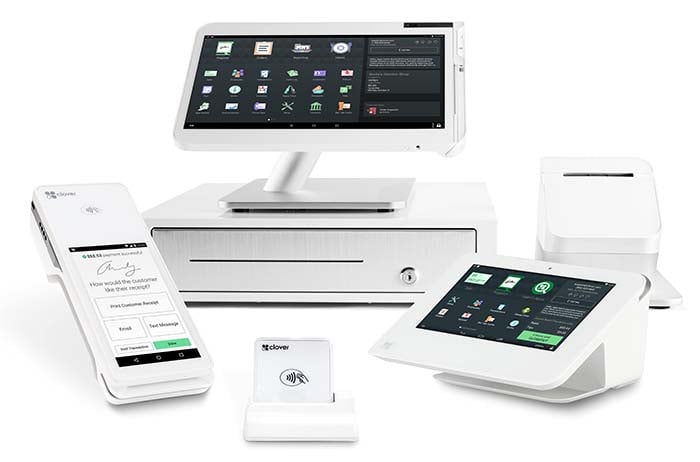
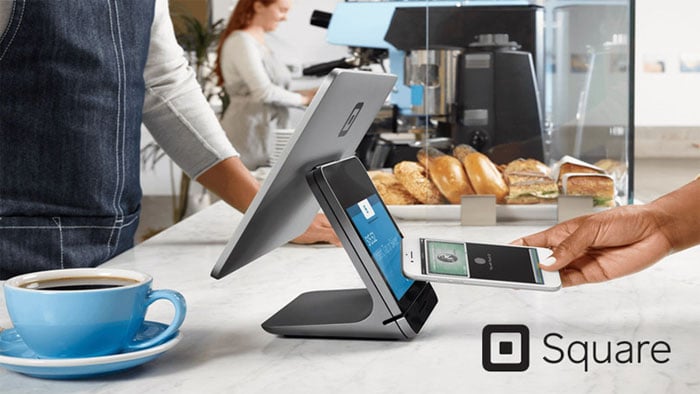
Lightspeed Retail wins for inventory-heavy retailers needing multi-location tools and advanced reporting. Square is simpler and cheaper for small shops. Shopify POS is ideal if you’re already on Shopify eCommerce. Clover offers all-in-one hardware but less inventory depth.
Who Should Use Lightspeed Retail?
✅ Best fit for:
- Apparel and footwear stores with size/color variants
- Sporting goods, bike shops, and outdoor retailers
- Pet stores, gift shops, and specialty retail
- Multi-location retailers needing centralized inventory
- Stores selling both online and in-store
- Businesses that need detailed reporting and analytics
❌ Not ideal for:
- Very small or simple retail operations
- Businesses on tight budgets (see Vibe Retail POS or Square)
- Shops that don’t need advanced inventory features
- Restaurants or food service (see Lightspeed Restaurant instead)
FAQ
How much does Lightspeed Retail cost?
Lightspeed Retail costs $89/mo for Basic, $149/mo for Core, and $289/month for Plus on annual billing. Month-to-month billing is $109, $179, and $339. Each plan includes one register; extra registers are $59/month each.
What are Lightspeed Retail's processing fees?
Lightspeed’s retail pricing page lists a card-present rate of 2.6% + 10¢ through Lightspeed Payments on every plan. Online and keyed-in rates aren’t published on the pricing page, so ask for them in your quote.
Is there a free trial?
Yes. Lightspeed Retail offers a 14-day free trial so you can test the system before committing.
Can I use my own hardware?
Yes. Lightspeed works with iPads, receipt printers, barcode scanners, and cash drawers. Lightspeed-certified hardware ensures best compatibility, but you can use third-party equipment if compatible.
Can I use my own payment processor?
Yes, but Lightspeed charges an additional monthly fee based on your transaction volume if you don’t use Lightspeed Payments. For most retailers, staying on Lightspeed Payments is the simpler and cheaper path.
Does Lightspeed Retail work offline?
Yes, but only for basic sales. Reporting, inventory sync, and integrations require internet. The offline mode is limited compared to some competitors.
What industries is Lightspeed best for?
Apparel, sporting goods, pet stores, gift shops, health and beauty, electronics, bike shops, and other inventory-rich retail, especially multi-location stores or those selling online.
Does Lightspeed offer 24/7 support?
Yes. Every plan includes 24/7 chat support. 24/7 phone support is included on the Plus plan. There’s also a help center with video tutorials and Lightspeed University for staff training.
How does Lightspeed compare to Shopify POS?
Lightspeed Retail starts at $89/mo with deeper inventory tools and vendor catalog ordering, and processes cards at 2.6% + 10¢. Shopify POS starts at $29/mo and is the better fit if your business is built around a Shopify online store. Choose Lightspeed for inventory-heavy, multi-location retail; Shopify for ecommerce-first brands.
Verdict
Lightspeed Retail POS stands out for growing and inventory-heavy retail businesses. The matrix inventory system, vendor catalog access, multi-location syncing, and detailed reporting make it a powerful choice, especially for apparel shops, sporting goods stores, and specialty retailers who need more than a basic register.
It’s not the cheapest system on software, and smaller businesses may find the learning curve hard to justify. Plan on Core if you want loyalty and advanced reports, and Plus if you need 24/7 phone support. But for serious retailers who want enterprise-level features in a cloud-based package, Lightspeed Retail delivers.
Expert Rating: ⭐ 9/10. Excellent inventory management and multi-location tools for growing retailers. The learning curve and tiered pricing keep it from a higher score, but for inventory-heavy retail, Lightspeed is hard to beat.

Jason Feemster
POS systems expert and founder of POSUSA.com, a trusted industry resource since 2011. With over a decade of hands-on experience testing and reviewing point-of-sale systems, he helps business owners choose solutions that actually fit their needs.
Specification: Lightspeed Retail POS
|
Videos: Lightspeed Retail POS


Photos: Lightspeed Retail POS

User Reviews
Be the first to review “Lightspeed Retail POS”












There are no reviews yet.