

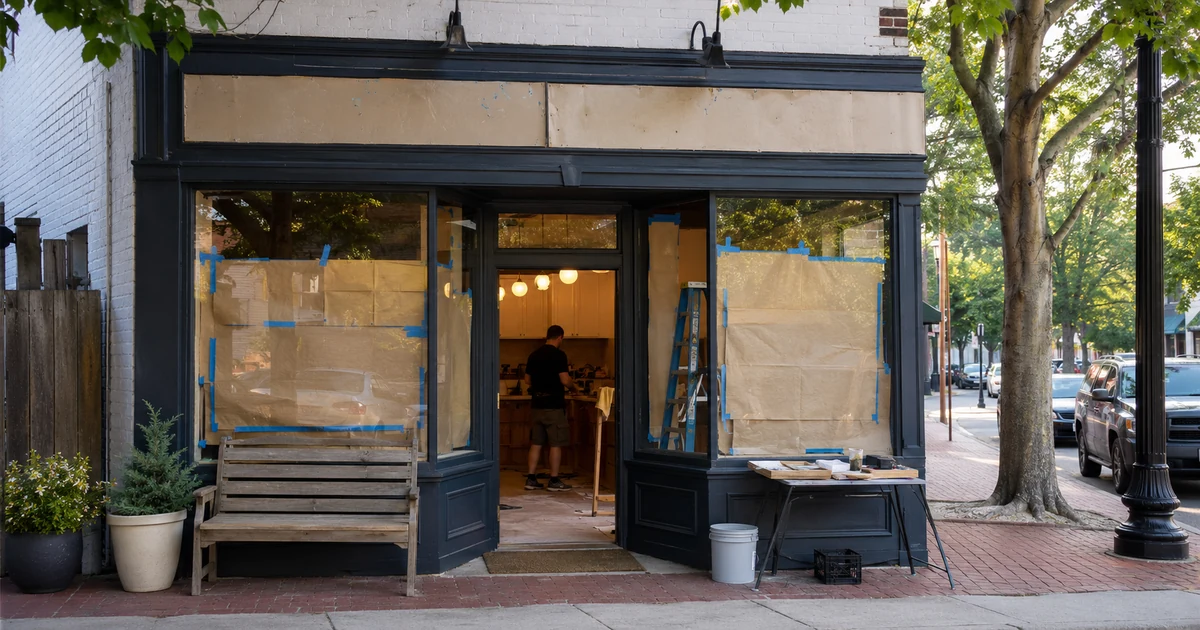
I’ve watched a lot of restaurants open over the years, and the name is one of those decisions that feels huge in the moment and then either fades into the background or quietly works against you for years. Most owners overthink it in the wrong direction. They chase clever when they should be chasing clear, or they lock in something so specific it boxes them in the day they want to add a second location.
So let’s walk through how to actually do this. Not naming theory, just what holds up once the sign is on the building and the name is living on your menus, your receipts, your delivery apps, and every review someone leaves at 11pm.
How to Come Up With a Restaurant Name
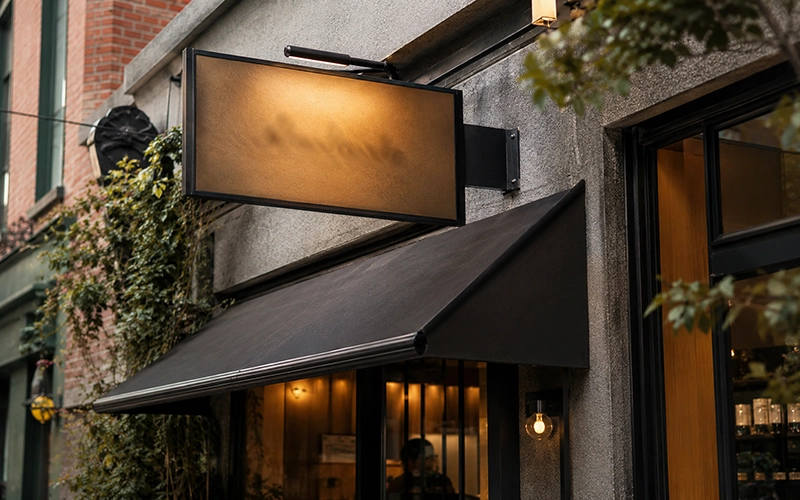
Start with the feeling, not the words. Before you brainstorm a single name, get clear on what you want someone to feel when they hear it. A tight cocktail bar for young professionals and a family taco spot are pulling in opposite directions, and the name has to match the room.
From there, the ideas usually come from one of a few places. Owners tend to name their restaurant after themselves or a family member, after the neighborhood or a local landmark, after the cuisine or a signature dish, or after the vibe they’re going for. All of those work. What matters is that the source feels true to the place, because customers can smell a name that was picked because it sounded trendy.
A trick that’s served people well: write down twenty ideas fast without judging any of them, then say each one out loud like you’re answering the phone. “Thanks for calling ___, how can I help you?” Half of them fall apart right there. The ones that still sound good spoken are your real shortlist.
What Makes a Good Restaurant Name?
After all the ones I’ve seen work and not work, the good ones almost always share the same handful of traits.
- Short. One to three words. It fits on signage, it fits on a to-go cup, and people actually remember it.
- Easy to spell. If a customer can’t spell it, they can’t find you online, and word of mouth dies the second someone has to say “it’s spelled kind of weird.” Clever spellings cost you searches.
- Easy to say. It has to survive being said out loud over a noisy phone line and repeated to a friend.
- A hint of what you do. The name doesn’t have to spell out the cuisine, but a little signal helps. It gives people a reason to walk in.
- Room to grow. This is the one owners miss. Name it “Downtown Fish Tacos” and you’re stuck the day you want to add ramen or open a second location. Keep it a little open on purpose.
That last point is worth sitting with. In my experience, the names that age the worst are the ones that were too specific about food or geography on day one. You want a name that still fits when the business grows past the plan you have today.
Restaurant Name Ideas by Style
Sometimes you just need a running start. Looking at names grouped by the feeling they give off is a fast way to figure out which direction fits your place, even if you don’t pick any of these exact ones. Here are a few examples across the styles most restaurants land on.
- Classic and timeless: The Copper Table, Hearth & Oak, Nonna’s Kitchen, The Corner Booth. These lean warm and established, and they age well.
- Modern and trendy: Ember, Salt, Provisions, Common Grounds. Short, single words or clean pairs that feel current without trying too hard.
- Playful and casual: Holy Guacamole, Wok This Way, Pizza My Heart, The Daily Grind. Fun works great for counter-service and family spots, less so for fine dining.
- Elegant and upscale: Lumiere, The Gilded Fork, Veranda, Solace. Softer sounds and a little restraint signal a higher price point before anyone reads the menu.
- Place or cuisine-driven: Riverside Cantina, Bourbon Street Kitchen, Tuscan Sun. Tie to your location or food, just leave yourself room to grow so you’re not boxed in later.
Use these as a feel test, not a shopping list. Once a direction clicks, you’ll start generating your own that fit better than anything on a generic list. And whatever you land on, run it through the checks below before you get attached.
Name Ideas by Cuisine
Cuisine gives you a natural well to draw from, the language, ingredients, and regions tied to the food. A few starting points:
- Italian: Trattoria Fiora, Olio & Pane, Casa di Bosco, Rosso. Italian words for places, ingredients, or family read as authentic without being fussy.
- Mexican: Agave & Lime, Casa Verde, El Farol, Comal. Ingredients and warm, place-driven words carry the vibe.
- Seafood: Brinehouse, The Drift Hook, Salt & Net, Tide Table. Words that evoke the coast and freshness do the work here.
- Breakfast and cafe: Grain Theory, Amber Morning, Toast & Hollow, The Slow Pour. Mood beats literal, skip “sunrise” and reach for texture and calm.
- BBQ and Southern: Ember & Ash, Smoke Line, Porch & Pit, Hollow Oak. Fire, wood, and place words signal what you do before anyone smells it.
Notice these hint at the cuisine without locking you into one dish. That’s the balance you want.
Can AI Help You Name Your Restaurant?
AI tools like ChatGPT and Claude are genuinely useful for naming a restaurant, but only for one part of the job. They’re a great brainstorming partner and a terrible decision-maker. Ask one to generate fifty name ideas for a coastal seafood spot with a casual vibe, and you’ll have a list in seconds. That’s real value when you’re staring at a blank page and nothing’s coming.
Where it falls short is everything that actually matters after the brainstorm. AI doesn’t know there’s already a place with that name three blocks over. It won’t check the trademark database, it can’t tell you the .com is taken, and left alone it tends to drift toward generic (expect a lot of “Coastal Kitchen” and “The Salty Anchor”). So treat whatever it gives you as raw material, not answers.
The workflow that actually works: use AI to generate a big pile of options fast, pull the handful that make you feel something, then run every one of them through the same checks you’d use on any name. The domain, the socials, the Google search, the trademark, the say-it-out-loud test. The tool speeds up the front of the process. The judgment at the back is still yours.
How to Choose a Restaurant Name From Your Shortlist
Once you’ve got three or four you’re attached to, stop generating and start pressure-testing. This is where most of the bad decisions get caught, if you bother to check.
- Check the domain. You want the .com if you can get it. Search it before anything else, because the name and the web address really should match.
- Check the social handles. Look on Instagram, Facebook, and TikTok. A name that’s taken on every platform is going to be a branding headache before you’ve served a single plate.
- Search it on Google and the delivery apps. If there’s already a restaurant with that name three towns over, or worse, in your own city, you’ll spend years fighting for your own search results. Look before you leap.
- Say it to people who’ll be honest. Not your mom. People who match your future customer. Watch their face when they hear it.
How to Trademark a Restaurant Name
Here’s the part people skip and regret. Before you print a single menu, do a trademark search through the USPTO trademark database to make sure nobody already owns the name in the restaurant category. It’s free to search, and it can save you from a very expensive letter down the road.
Checking is not the same as registering. A search tells you whether the name is clear. Registering a trademark actually protects it, and if you’re planning to build a brand you care about, or ever franchise, it’s worth talking to a trademark attorney about filing. For a single neighborhood spot, a clean search plus registering your business name with your state may be enough to start. Where your plans are bigger than one location, get real legal advice. This isn’t the corner to cut.
To be clear, I run a POS resource, not a law firm, so treat this as the practical lay of the land and not legal advice. A trademark attorney is cheap insurance compared to rebranding an established restaurant.
You’ve Got the Name. Now Comes the Real Work.
Naming the place is the fun part, and it’s over faster than you’d think. The stuff that actually decides whether you make it is everything after: the buildout, the equipment, the staffing, and the systems that keep the money straight. Before you get too far, it helps to know what you’re walking into financially, our restaurant startup cost calculator gives you a fast estimate, and the cost to open a restaurant breakdown walks through where the money actually goes.
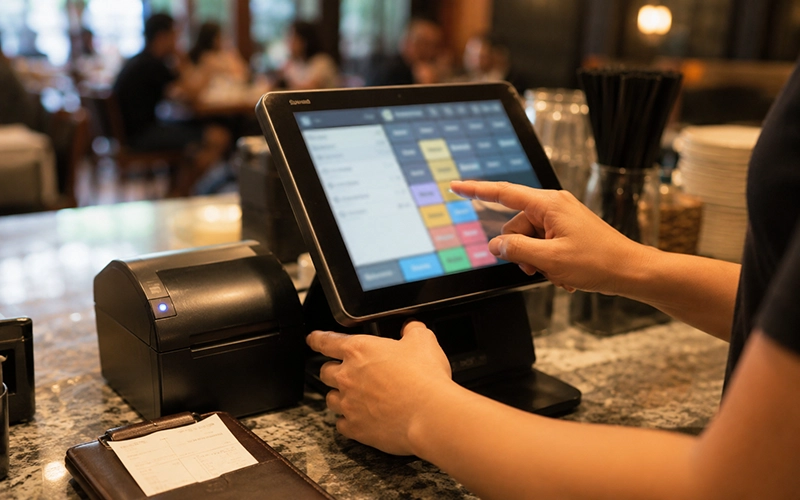
The point-of-sale system is one of those decisions that quietly runs the whole operation. It’s your ordering, your payments, your reporting, your inventory, your labor tracking, all of it. I’ve seen owners pour months into the perfect name and then grab whatever POS the first sales rep pushed, and they feel that mistake every single day at close. Give it the same attention you gave the name. If you want a head start, our top-rated restaurant POS systems guide ranks the best options for new operators.
Frequently Asked Questions
How do I come up with a name for my restaurant?
Start with the feeling you want to create, then pull ideas from your cuisine, your location, a signature dish, your own name, or the atmosphere you’re building. Write down twenty options fast without judging them, say each one out loud like you’re answering the phone, and keep the ones that still sound good spoken. The name ideas by style above can help you spot a direction that fits.
What makes a good restaurant name?
A good restaurant name is short (one to three words), easy to spell, easy to say out loud, and gives people some hint of what you serve. It should also leave room to grow, so avoid names that lock you into one dish or one location if you might expand later.
How do I check if a restaurant name is taken?
Check three places: search the .com domain, check the handle on Instagram, Facebook, and TikTok, and search the name on Google and the major delivery apps to see if another restaurant is already using it. For legal clarity, search the USPTO trademark database and your state’s business name registry.
Do I need to trademark my restaurant name?
You should at least run a free trademark search on the USPTO database before you commit, to make sure nobody already owns the name in the restaurant category. Registering the trademark actually protects it, which is worth doing if you’re building a brand or planning to franchise. For a single location, a clean search plus a state business registration is often enough to start, but talk to a trademark attorney if your plans are bigger.
Should my restaurant name match my domain name?
Yes. Your name and your web address should match so customers can find you without guessing. If the .com for your favorite name is taken, that’s usually a reason to keep looking rather than settle for an awkward domain nobody will type correctly.
How long should a restaurant name be?
One to three words is the sweet spot. Short names fit on signage and to-go packaging, they’re easier to remember, and they work better as domains and social handles. If a name is hard to spell or takes a full breath to say, it’ll cost you in word of mouth and online searches.

Jason Feemster
POS systems expert and founder of POSUSA.com, a trusted industry resource since 2011. With over a decade of hands-on experience helping business owners open and run restaurants, he writes about the tools and decisions that actually move the needle on day one.