How to Keep Customers Coming Back to Your Restaurant


Here’s a number that should change how you spend your marketing budget. Depending on whose study you read, landing a brand-new customer costs anywhere from five to twenty-five times more than keeping one you already have. The exact multiple is debated, but every version of it points the same way. And your regulars don’t just cost less. They spend more per visit, they’re more forgiving when a Tuesday night goes sideways, and they’re the ones telling their friends about you.
So why do so many restaurant owners pour every dollar into chasing strangers?
In my experience, it’s because retention feels passive. You assume happy customers will just come back on their own. Sometimes they do. But the restaurants that actually grow their repeat business treat it like a system, not a hope. Below are the strategies that work, why they work, and where your POS quietly does a lot of the heavy lifting. (And if you’re also working on the other side of the coin, pulling new people in, our guide to restaurant marketing strategies covers that end.)
Why Retention Beats Acquisition (The Math)
Let’s start with the part nobody wants to sit with: the new-customer treadmill is exhausting and expensive.
When you market to strangers, you’re paying to convince someone who has never tasted your food that you’re worth a shot. That’s ads, that’s discounts to get them in the door, that’s a lot of money spent on people who might never return. Your regulars already know your menu, already trust your service, and already like the place. All you have to do is stay in their lives.
The industry rule of thumb tracks the Pareto Principle here, roughly 80% of your revenue tends to come from about 20% of your customers. Some operators report that 65% to 80% of restaurant sales come from repeat diners, with only 20% to 30% from first-timers. The exact split varies by concept, but the direction never does. Regulars carry the business.
A healthy restaurant retention rate usually lands between 60% and 70%, meaning that share of your guests comes back on a regular basis. Quick-service spots often run higher, 70% to 80%, because the visits are frequent and cheap. Fine dining runs lower, sometimes 50% to 60%, since people save it for occasions. Figure out which bucket you’re in before you judge your own numbers. A 55% retention rate is rough for a sandwich shop and pretty solid for a steakhouse. The National Restaurant Association publishes industry benchmarks worth checking against your own concept.
1. Build a Loyalty Program People Actually Join
Every retention article on the internet tells you to start a loyalty program. They’re not wrong. They just stop at the obvious part and skip the part that actually determines whether it works.
Here’s the thing most people miss: the reward isn’t the hard part. The signup is.
I’ve watched restaurants launch beautiful points programs and then lose most of their potential members at enrollment, because the ask was too big. Download an app, create an account, make up a password, verify an email. Your best regulars, the people who already love you, are the most likely to bail on that, because they’ve already got 40 apps they don’t use. The friction kills you before the program ever gets a chance.
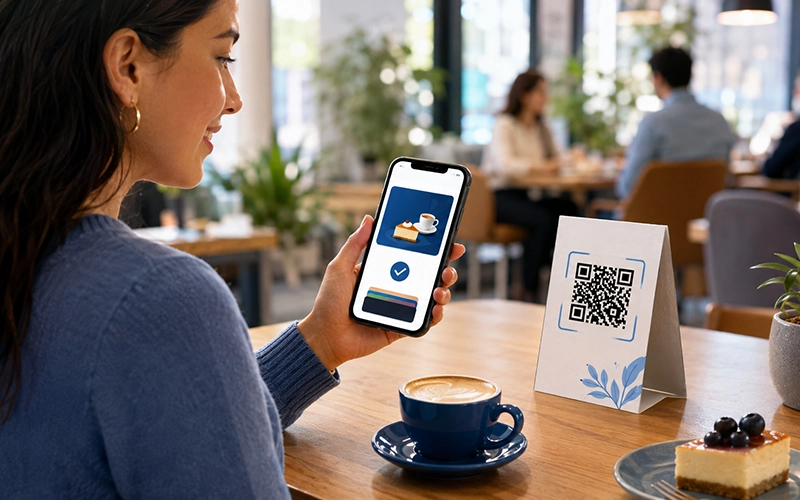
So the first rule of a loyalty program is to make joining take 20 seconds. A QR code on the table that drops a card straight into Apple Wallet or Google Pay, no download required, will out-enroll an app every single time. When you strip out the app requirement, signup rates tend to climb dramatically.
Once people are in, the structure matters. Two basic models:
| Program Type | How It Works | Best For |
|---|---|---|
| Points / spend-based | Earn points per dollar (spend $50, get $5 back) | Higher-ticket concepts, fine and casual dining |
| Visit-based | Earn a reward after X visits (buy 9, get the 10th free) | Cafes, QSR, anywhere with a regular lunch or dinner crowd |
For a place with a steady daily rhythm, a coffee shop, a lunch counter, a neighborhood taco spot, visit-based programs tend to beat pure points on repeat visits. The reward feels closer and more achievable, so people chase it. For a steakhouse where someone comes in once a month, spend-based makes more sense.
Whatever you pick, your POS should run it. Most modern restaurant systems have loyalty built in or available as an add-on, tracking customers by phone number, email, or the card they pay with. That last part matters more than it sounds, because it ties the loyalty data to actual purchase behavior, which feeds everything else on this list. Restaurant systems like Shift4 Dine, Square, and Toast bake loyalty right into the platform, so it’s worth checking what your system already includes before paying for a third-party add-on.
2. Capture Customer Info So You Can Reach Them Later
You can’t bring someone back if you have no way to reach them. Sounds obvious. Gets ignored constantly.
The single most valuable thing your loyalty program does isn’t handing out free desserts. It’s collecting contact information. Once you have a customer’s email or phone number, you own a direct line to them that doesn’t depend on an algorithm deciding whether your social post gets seen.
This is where a lot of restaurants leave money on the table. They process thousands of transactions a month and capture nothing. Every one of those guests is a relationship you could have nurtured, gone.
The good news is the capture can be painless when it’s tied to the POS. Loyalty signup at checkout, a prompt on the customer-facing display, an emailed receipt that asks if they want offers. You’re not running a data-mining operation. You’re just making sure that when someone has a great meal, you can remind them you exist next week.
3. Use Email and Text to Stay Top of Mind
Now that you can reach people, here’s what to actually send.

Email is still one of the most cost-effective channels in the business. Surveys consistently show a big chunk of diners, around 40%, prefer email as the way they hear about restaurant promotions, and nearly half say a marketing email has influenced a purchase. Text gets even higher open rates. The catch, and this is the part owners blow, is relevance. Too many emails or generic blasts and people unsubscribe fast. Send the right message at the right moment and they show up.
A few campaigns that earn their keep:
- Win-back messages. When a regular goes 30 days without a visit, send something direct. “It’s been a while, come grab a free dessert this week.” This is probably the highest-ROI automation in restaurant marketing, because you’re reaching someone who already liked you and just drifted.
- Birthday rewards. Capture the birthday month at signup (month only, people get weird about exact dates) and send a treat the week of. Birthday messages tend to have the best open and conversion rates of anything you send, because people genuinely want to celebrate at a restaurant. You’re just making the choice easy.
- Slow-night pushes. If Tuesday and Wednesday are dead, send a Monday-evening offer to your loyalty list only. “Tomorrow: 15% off for members.” You fill a slow night without slapping a public discount on your brand, since only members see it.
Notice the pattern. The best campaigns aren’t random promotions. They’re triggered by customer behavior, a lapse, a birthday, a slow day, which is only possible when your loyalty and POS data are talking to each other. This is the part that separates a real retention system from a guy blasting the same coupon to everybody.
4. Make the Experience Worth Coming Back For
I’ll be blunt. You can nail every tactic above and still bleed customers if the food or service isn’t there. No app saves a cold entree.
A Deloitte study on what diners value most landed on something refreshingly low-tech: friendly, hospitable staff, followed by feeling like their choices and feedback actually mattered. People remember how you made them feel. A warm greeting, a server who remembers their usual, a manager who handles a mistake gracefully, that’s the stuff that builds the kind of loyalty no points program can buy.
And it cuts both ways. One genuinely bad experience can undo years of goodwill. Worse, an unhappy customer doesn’t just quietly disappear. They tell friends and they leave reviews. So the experience isn’t a “nice to have” sitting next to your retention strategy. It is the retention strategy. Everything else just amplifies it.
A few things that quietly protect the experience:
- Get orders right, especially takeout and delivery. A dine-in mistake gets fixed at the table. A missing item in a delivery bag just makes someone feel cheated with no recourse. Order accuracy at the POS and kitchen level matters more than people credit.
- Staff your shifts properly. The right number of people in the front and back of house is the difference between “they took care of me” and “I waited 20 minutes for water.” Loyalty is built one good shift at a time.
- Keep it consistent. A regular comes back because they know exactly what they’re getting. Consistency is underrated and unglamorous, and it’s the whole game.
5. Personalize, Because Generic Doesn’t Work Anymore
When a customer feels like you actually know them, they stick around. That’s not a marketing slogan, it’s just human.
Personalization sounds fancy, but it runs on the data you’re already collecting. If your system knows a customer always orders the seafood, you can let them know when there’s a new fish on the menu. If you know someone’s a Friday-night regular, a Friday offer lands better than a random Monday blast. Greeting a repeat guest by name does more than any discount.
This is the payoff for everything in steps one through three. Once loyalty, contact info, and purchase history live together in your POS, personalization stops being a heavy lift and starts being a setting. The restaurants that feel like they “get” their regulars usually aren’t working harder. They just have a system that remembers for them.
6. Respond to Reviews (All of Them)
Your reviews aren’t just there to win over strangers. They’re a retention tool, and most owners ignore them.
Responding to Google reviews, the good and the bad, tells the reviewer and every future reader that you’re paying attention. For a negative review, the formula is simple: acknowledge it, apologize without writing an essay, and invite them back. Something like, “I’m sorry that visit missed the mark. I’d love the chance to make it right, please reach out to me directly.” That move converts unhappy reviewers into returning customers more often than owners expect. People don’t need you to be perfect. They need to know you care when something goes wrong.
7. Track the Numbers That Actually Predict Repeat Business
You can’t improve what you don’t measure, and “it feels busy” isn’t a metric.
A handful of numbers tell you whether your retention is actually working:
| Metric | What It Tells You |
|---|---|
| Retention rate | What share of customers come back over a given period. The headline number. |
| 90-day return rate | Of guests who visited in the last 90 days, how many came back. A great early-warning signal. |
| Repeat purchase rate | How often the same customers order again. Rising means satisfaction is real. |
| Customer lifetime value (CLV) | Total revenue a customer generates over the whole relationship. The number that justifies the spend. |
Calculating retention is simpler than it sounds. If you had 1,000 unique customers one month and 300 of them came back the next, that’s a 30% retention rate. Track it monthly. If your 90-day return rate is climbing, you’re building something durable. If it’s flat or sliding, no new Instagram strategy is going to fix the underlying problem, you’ve got a deeper issue to solve.
Most of this reporting lives in your POS. If you’re tracking retention by hand in a spreadsheet, that’s a sign your system is working against you instead of for you.
Where Your POS Fits Into All of This
Read back through these strategies and you’ll notice something. Loyalty programs, contact capture, automated email and text, personalization, retention reporting, they all run through one piece of equipment. Your point-of-sale system.
That’s not a coincidence, and it’s not me trying to sell you software. It’s just where the data lives. A POS that handles all of this in one place turns retention from a pile of disconnected tools into one system that mostly runs itself after setup. A POS that can’t, an old terminal, a basic card reader, a setup with no customer database, leaves you doing everything by hand or not at all.
From what I’ve seen, this is the quiet reason some restaurants have loyal regulars and others are stuck on the new-customer treadmill. It’s rarely that one owner cares more. It’s that one of them has a system doing the remembering, the messaging, and the measuring automatically.
If your current setup can’t run the basics, loyalty, customer data, and automated campaigns, it’s worth looking at what else is out there before you spend another season chasing strangers. Our free comparison tool matches you to systems that fit, and the POS cost guide breaks down what you’ll actually pay.
Want a POS that handles loyalty and customer retention out of the box?
Compare Restaurant POS Systems
Frequently Asked Questions
How do I get customers to come back to my restaurant?
The strategies that work most reliably are a low-friction loyalty program, capturing customer contact info at checkout, and using automated email or text campaigns like win-back offers and birthday rewards. Underneath all of it, consistent food and service is what makes people want to return in the first place. Most of these run through your POS system, which tracks loyalty, customer data, and purchase history in one place.
What is a good customer retention rate for a restaurant?
A healthy restaurant retention rate generally falls between 60% and 70%, meaning that share of customers returns regularly. Quick-service restaurants often run higher, around 70% to 80%, because visits are frequent. Fine dining tends to sit lower, around 50% to 60%, since those visits are occasion-based. Compare yourself to your own category, not the industry as a whole.
Are restaurant loyalty programs worth it?
Yes, for most restaurants they pay off, but the design matters more than the existence. The biggest factor is signup friction. Programs that require an app download lose most potential members at enrollment, while ones that save a card to Apple Wallet or Google Pay in one tap enroll far more people. Visit-based programs tend to work best for cafes and quick-service spots, while spend-based programs fit higher-ticket dining.
How much cheaper is it to keep a customer than find a new one?
Industry research, including widely cited figures from Harvard Business Review, puts the cost of acquiring a new customer at anywhere from five to twenty-five times more than retaining an existing one, depending on the business and how you measure it. On top of that, loyal customers tend to spend more per visit, and they refer friends, which lowers your acquisition cost even further.
Does my POS system affect customer retention?
Quite a bit, actually. Loyalty programs, contact capture, automated email and text campaigns, personalization, and retention reporting all run through your POS. A system with these features built in lets you automate most of your retention work, while a basic terminal or card reader leaves you doing it by hand or skipping it entirely. If retention matters to you, it’s worth checking whether your restaurant POS can actually support it.
What metrics should I track to measure customer retention?
Start with your retention rate (what share of customers return over a period), then add your 90-day return rate, repeat purchase rate, and customer lifetime value. To calculate a basic retention rate, divide the number of returning customers by your total unique customers for the period. Most POS systems report these for you, so you’re not stuck doing it in a spreadsheet.
The honest bottom line: keeping customers coming back isn’t one big move. It’s a handful of small systems working together, a loyalty program people will actually join, a way to reach them, the discipline to send the right message at the right time, and food and service good enough to back it all up. Get those running and the new-customer treadmill stops being your whole life.
And if your POS is the thing holding you back, that’s a fixable problem.

Jason Feemster
POS systems expert and founder of POSUSA.com, a trusted industry resource since 2011. With over a decade of hands-on experience testing and reviewing point-of-sale systems, he helps business owners choose solutions that actually fit their needs.