

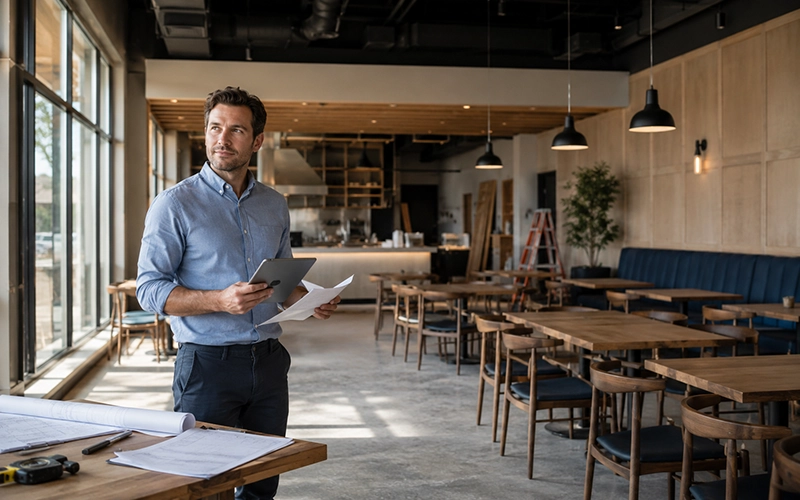
Short answer: most independent restaurants cost somewhere between $175,000 and $500,000 to open, with the median landing around $375,500. But that range hides a lot. A small takeout spot or a food truck can open for under $100,000, while a full-service restaurant in a major metro can blow past $700,000 before you serve a single plate.
So the real answer depends on three things: your concept, your location, and how much work your space needs before it’s ready. From what I’ve seen over the years, that last one, the buildout, is where budgets quietly explode. Let’s break the whole thing down by category, walk through every real line item with current numbers, and look at where you can actually save.
Restaurant Startup Costs by Type
Before you can pin down a number, you have to pin down what kind of restaurant you’re opening. The format drives everything else, and the gap between concepts is enormous.
| Restaurant Type | Typical Startup Cost | What Drives the Cost |
|---|---|---|
| Food truck | $50,000 – $150,000 | The truck and equipment buildout, far less than real estate |
| Ghost kitchen / delivery-only | $50,000 – $100,000 | No dining room, shared or small kitchen space |
| Quick-service / takeout | $100,000 – $300,000 | Smaller footprint, simpler kitchen, limited seating |
| Full-service restaurant | $175,000 – $500,000+ | Full kitchen, dining room, bar, larger staff |
| Fine dining | $400,000 – $1,000,000+ | High-end buildout, premium location, specialized equipment |
The median independent restaurant comes in around $375,500, with full-service concepts averaging closer to $475,500 and limited-service spots nearer $225,500. If those numbers make your eyes water, the good news is the lower-cost formats, food trucks, ghost kitchens, takeout, are exactly where a lot of smart operators start before committing to a full buildout. Want to run your own number as you read? Our free restaurant startup cost calculator does the math for you.
The Real Cost Breakdown, Line by Line
Here’s where the money actually goes for a full-service restaurant, the format most people picture. Smaller concepts scale these down; fine dining scales them up.
| Expense | Typical Range | Notes |
|---|---|---|
| Lease deposit & first rent | $6,000 – $30,000 | Rent often runs 6% to 10% of projected sales; metros cost far more |
| Buildout / renovation | $50,000 – $250,000+ | The biggest variable. Second-generation spaces cost far less |
| Kitchen equipment | $75,000 – $115,000 | Ovens, ranges, refrigeration, prep, dishwashing. Used gear cuts this |
| Furniture & dining room | $20,000 – $80,000 | Tables, chairs, decor, lighting, bar fixtures |
| Licenses & permits | $2,000 – $10,000 | Business license, food service permit, certificate of occupancy |
| Liquor license | $300 – $400,000+ | Wildly state-dependent; a major cost in some states, minor in others |
| POS & technology | $2,000 – $12,000 | POS terminals, card readers, kitchen display, online ordering setup |
| Initial inventory | $10,000 – $30,000 | First food and beverage orders, plus packaging and supplies |
| Pre-opening payroll & training | $10,000 – $40,000 | Hiring and training staff before you earn a dollar |
| Branding & marketing | $5,000 – $20,000 | Logo, signage, website, opening promotion |
| Insurance | $3,000 – $12,000/yr | General liability, property, liquor liability, workers’ comp |
Add it all up and you land in that $175,000 to $500,000 zone for most full-service concepts. Where you fall inside it comes down mostly to two line items: your buildout and your location. Which brings me to the part that wrecks more budgets than anything else.
The Hidden Cost That Wrecks Budgets: Buildout
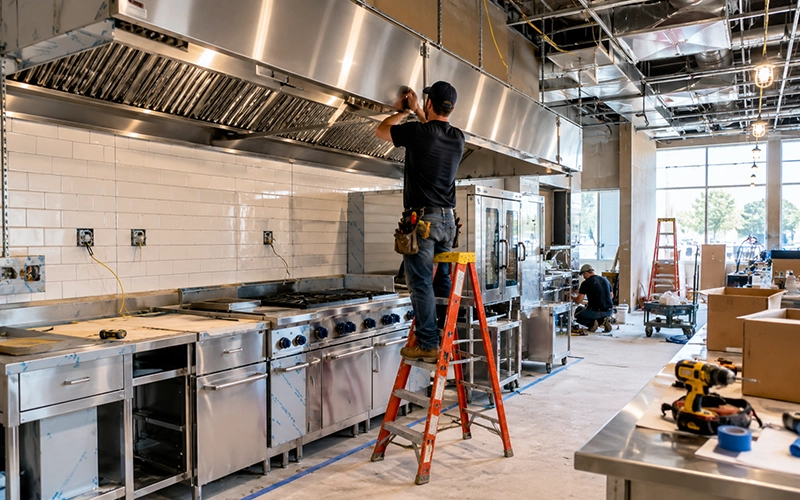
If I could give a first-time owner one piece of advice, it’d be this: a cheap empty space is rarely a cheap restaurant. The rent looks great, the location looks perfect, and then you discover the space has no hood ventilation, no grease trap, no floor drains, and not enough electrical capacity to run a commercial kitchen.
Adding all of that from scratch is brutally expensive. A commercial hood and fire suppression system can run $10,000 to $30,000. A grease trap can hit $5,000 to $15,000. Then there’s three-phase electrical, plumbing for prep and dish stations, HVAC, walk-in coolers, none of it cheap, and all of it has to happen before you open.
Here’s the single biggest money-saver in this entire process: lease a second-generation space, somewhere that was already a restaurant or food business. It likely comes with the expensive infrastructure already in place. That one decision can save you $30,000 to $80,000 in buildout costs alone. When you’re scouting locations, look at former restaurant spaces first. It’s the closest thing to free money you’ll find opening a restaurant.
Don’t Forget Working Capital
This is the mistake that quietly closes more restaurants than bad food: running out of cash during the ramp-up.
Plenty of “failed restaurants” were really failed cash plans. The owner spent everything getting the doors open, then the first few months came in slow because word hadn’t spread yet, and the runway ran out before the regulars showed up. Your buildout and equipment are only part of the budget. You also need operating reserves to cover rent, payroll, and food orders while sales climb.
A solid rule: budget 3 to 6 months of operating expenses on top of your startup costs, then add a 10% to 20% contingency buffer because something always costs more than the quote said. A $300,000 buildout realistically needs another $50,000 to $100,000 in reserves behind it to survive the first year. Plan for the cushion, not just the opening. Knowing your break-even point before you sign anything helps too, our break-even calculator and the SBA’s break-even guide both walk you through it.
How to Fund Your Restaurant
Very few people open a restaurant entirely out of pocket. Most combine a few funding sources:
- SBA loans. The SBA 7(a) program is the most common path, offering up to $5 million with repayment terms up to 10 years for equipment and working capital. Expect to need a credit score around 680+ and a solid business plan to qualify.
- Equipment financing. Lets you spread the cost of ovens, refrigeration, and other big-ticket gear over time instead of paying upfront, often with the equipment itself as collateral.
- Private investors. Friends, family, or outside investors who put in capital in exchange for equity or a share of profits. A credible plan with conservative projections is what gets these funded.
- Personal capital. Most owners put in some of their own money, which also signals commitment to lenders and investors.
Whatever mix you choose, the key is a business plan with credible, conservative financial projections. Vague assumptions get rejected; sourced, realistic numbers get funded. The SBA has a free business plan template that’s a good starting point.
Where the POS System Fits
Your point-of-sale system is one line item on the budget above, usually $2,000 to $12,000 to set up depending on how many terminals and what hardware you need, plus a monthly software fee. It’s not the biggest cost, but it’s one of the few that touches everything once you’re open. It rings up every sale, runs your card payments, sends orders to the kitchen, tracks what’s actually selling, manages loyalty, and feeds your reports.
One practical tip on timing: most POS providers need at least 30 days to get a system fully programmed and installed, so don’t leave it for the last minute. You don’t want to delay your opening, or worse, open before your point of sale is actually working. For a fuller breakdown of what to budget, see our POS system cost guide.
How to Lower Your Startup Costs
A few honest ways to open for less without cutting the corners that matter:
- Lease a second-generation space. As covered above, this is the single biggest saver, $30,000 to $80,000 off your buildout. Inherited kitchen infrastructure beats building from scratch every time.
- Start with a smaller format. A food truck, ghost kitchen, or takeout-only concept can open for a fraction of a full-service restaurant, and it lets you prove demand before committing to a big lease.
- Buy used equipment. Ovens, ranges, and refrigeration are workhorses that last for years. Restaurant auctions and closures are full of nearly-new gear at a steep discount. Our restaurant equipment list breaks down what to buy first and what each piece actually costs.
- Lease the big-ticket equipment. Leasing high-cost items like walk-in coolers and commercial ovens lowers your upfront capital and often includes maintenance. Buy the small stuff outright.
- Keep the opening menu tight. A focused menu of dishes you can execute perfectly means less equipment, less waste, simpler training, and easier ordering than a sprawling one.
Frequently Asked Questions
How much does it cost to open a restaurant?
Most independent restaurants cost between $175,000 and $500,000 to open, with a median around $375,500. Full-service restaurants average closer to $475,500, while limited-service and takeout concepts run nearer $225,500. Smaller formats like food trucks and ghost kitchens can open for $50,000 to $150,000. The biggest cost drivers are your buildout, your location, and your concept.
What is the biggest cost when opening a restaurant?
For most full-service restaurants, buildout and renovation is the largest and most variable cost, ranging from $50,000 to over $250,000. Kitchen equipment ($75,000 to $115,000) is usually the second biggest. Leasing a second-generation space that was already a restaurant can cut buildout costs by $30,000 to $80,000.
How much does it cost to open a small restaurant?
A small restaurant, think quick-service, takeout, or a limited-seating cafe, typically costs $100,000 to $300,000 to open. Food trucks and ghost kitchens come in even lower, often $50,000 to $150,000. These smaller formats are a popular way to prove a concept before committing to a full-service buildout.
How much money should I have in reserve after opening?
Plan for 3 to 6 months of operating expenses on top of your startup costs, plus a 10% to 20% contingency buffer. Many restaurants fail not because the concept was bad but because they ran out of cash during the slow opening months before word of mouth kicked in. The reserve is what carries you to break-even.
How much does a restaurant POS system cost?
A restaurant POS system typically costs $2,000 to $12,000 to set up, depending on how many terminals and what hardware you need, plus a monthly software fee. Many systems include online ordering, loyalty, and reporting built in. You can compare options here or read our POS system cost guide for a full breakdown.
How do people finance opening a restaurant?
Most owners combine several sources: SBA loans (the 7(a) program offers up to $5 million), equipment financing, private investors, personal savings, and sometimes crowdfunding. Lenders and investors want a business plan with credible, conservative financial projections before they’ll commit. A strong plan is what separates funded restaurants from rejected ones.
Is owning a restaurant profitable?
It can be, but margins are thin. The average restaurant profit margin runs 3% to 6%, with top operators reaching 10% or more. Success usually comes down to controlling food and labor costs, pricing menu items correctly, and keeping customers coming back. See our guide on restaurant customer retention for more on that last part.
The honest bottom line: there’s no single price tag on opening a restaurant, because your concept, your location, and your space swing the number by hundreds of thousands of dollars. Figure out your format first, build a real line-by-line budget, protect yourself with a cash reserve, and be smart about your space. Do that, and the scary range at the top of this page turns into a number you can actually plan around. And if you’re opening a more specific concept, our guide to what it costs to open a bakery breaks down that path in detail.

Jason Feemster
POS systems expert and founder of POSUSA.com, a trusted industry resource since 2011. With over a decade of hands-on experience testing and reviewing point-of-sale systems, he helps business owners choose solutions that actually fit their needs.






From my point of view, people who are planning to run a restaurant must opt for the best refrigeration so the food will be preserved properly. Well, aside from buying equipment, you are also right that it would be smarter to determine what concept would work best. I guess you made a pretty good point that it would be a great idea if they’ll consult with the food vendors too.